
The Agent Kill Switch: How AuthMind Detects and Contains Rogue AI Agents
AuthMind now detects rogue AI agents by type and behavior and contains them across identity, network and endpoint, with your team in control.

The Agent Had Valid Credentials
The most dangerous AI agent in your environment probably isn't breaking any policy. It authenticates through your IdP with a valid token and reaches resources over approved paths. If someone has hijacked it or hidden instructions in a document it reads, it will keep doing exactly that on an attacker's behalf.
Agents can go rogue in multiple ways: stolen tokens, prompt injection, shadow deployments through personal accounts and over-scoped access that drifts beyond its purpose. None of it shows up cleanly in one tool. The IdP sees a successful login, the EDR sees a normal process and the SIEM sees events with nothing tying them together. Even when someone catches the signal, containing the agent still means working through console after console by hand.
Introducing the AuthMind Agent Kill Switch
AuthMind now detects rogue AI agents by behavior and contains them automatically across identity, network and endpoint, with your team in control.
Detect what your security and identity tools miss
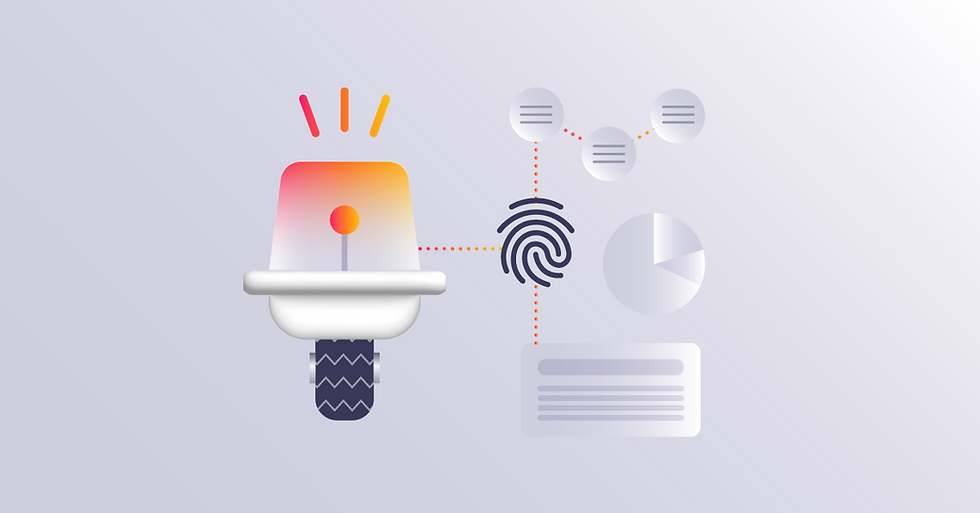
AuthMind's collectors pull identity and network telemetry from your IdPs, cloud providers, SaaS platforms, network and EDR into a single identity-to-activity graph. For each agent, AuthMind learns what normal looks like: the services it authenticates to and the hosts it runs from. It flags the moment an agent uses a role or a token beyond its scope, touches a sensitive resource it was not intended, escalates privileges or connects to an unsanctioned AI service. Because it follows the same identity across every layer, AuthMind can tell a legitimate agent from one that's been hijacked, prompt-injected or deployed as shadow AI.
Contain across three control points at once
When AuthMind detection crosses severity or confidence threshold, AuthMind playbook passes key information to AuthMind's automation framework, such as the agent identity, owner, host, destination and access path straight into the related kill switch workflow. The kill switch then acts on three fronts:
● Identity: Disable the account or service principal in the directory, IDp and Vault revoke sessions and tokens and rotate secrets.
● Network: Push block action to SASE devices, proxies and directly into workload, to cut the agent's path to its target.
● Endpoint: Direct Endpoint EDR to contain the host or kill the process.
Hitting all three together matters, since revoking a token alone can leave an open session and blocking one destination leaves the agent free to find another.
Stay in control
Human-in-the-loop approval can gate any action, so a false positive doesn't take down a critical business agent. Start with owner notification and analyst review, then escalate to full containment when the analyst confirms or the behavior continues. Every action is logged for audit, and the same playbook and workflow restores the agent once credentials are reissued.
Say Yes to Agents With Confidence
Some agents will be compromised. A kill switch changes what that costs you, so security teams can approve new agents knowing they can find a rogue one and stop it fast. It's the principle AuthMind was built on: secure what identities actually do, not just what policies intend.
Comments