
Your Agentic SOC Can Reason. Now, With AuthMind, It Has Identity Context.
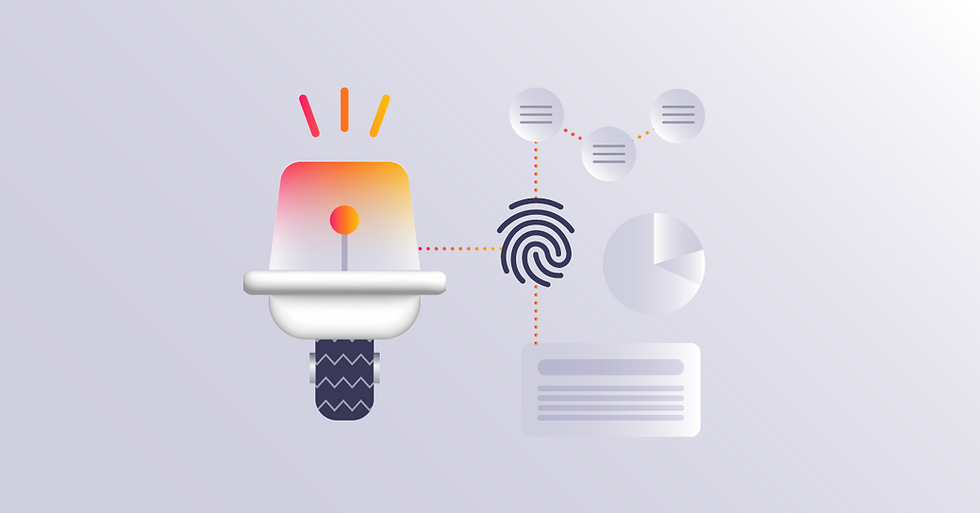
Agentic SOCs are changing how security teams work. Agents triage alerts, investigate detections, correlate signals, and draft response plans around the clock, and for teams covering more environments without more headcount, that's a big shift. AuthMind now seamlessly plugs into that workflow to solve two critical areas: SOC agents get deep identity context behind every alert, and they get identity threat detections for attacks that never show up as a failed login or a flagged email.
Identity Context for Every Investigation
AuthMind now connects directly to agentic SOC platforms. Mid-investigation, an agent can query the AuthMind Identity Access Graph and get back what identities actually accessed and did, not just what policies intended.
The answer comes back in two layers:
Identity data to see it. Which sub-accounts belong to the user, which resources and hosts it touched, which network paths it came in through, what roles it impersonated, and how it authenticated, all drawn from real observed activity.
Identity context to act on it. What those observed facts add up to: a posture score, patterns linking related events, and anomalies like suspected secret sharing. Picture a second sub-account authenticating from an unfamiliar network a few minutes after a phishing click.
With both in hand, the SOC agent can reach a defensible verdict and recommend actions specific to that identity or access path. For more detail, a SOC analyst agent or user is one click from the full timeline and profile in AuthMind.
Identity Threat Detection and Protection
Context makes existing alerts smarter, but plenty of identity attacks never raise an alert at all. A hijacked session or a shared credential passes as normal access in most tools because the authentication itself succeeded. Nothing failed, so nothing fires.
That's the gap AuthMind observes and closes. It correlates identity activity with network flows and cloud telemetry across human, NHI, and agentic AI identities, which lets it spot threats and blind spots that only show up in how access actually happens. That includes:
MFA bypass, plus token theft and session hijacking after login
Credentials, keys, and access tokens passed between users
Living-off-the-land (LOTL) lateral movement
Privileged access that routes around PAM controls
Shadow access through unmanaged accounts and local assets
These findings land in the agentic SOC as prioritized detections the agent can triage or investigate without waiting on a person. Teams then choose how response happens. The agent can act on its own recommendations, or AuthMind can block access, rotate credentials, and revoke tokens directly. Either way, every action is logged for audit.
See It in Action: From Phishing Click to Identity Takeover
Our new demo follows a scenario most SOC teams know well. Microsoft Defender for Office 365 flags a credential-harvesting click, and the alert shows up in an agentic SOC marked low severity. Nothing about it looks unusual yet.
Then the agent calls AuthMind. Without leaving the investigation, it pulls the user's identity posture from AuthMind’s Identity Access Graph, and two signals jump out: suspected access token sharing and access coming through a public VPN. Neither one shows up in the original MS Defender alert. Once the agent lines them up against related activity across the environment, including NTLM authentication on a domain controller at the same moment, that low severity click starts telling a very different story. The video shows where it leads and what the SOC agent recommends doing.
The last part of the demo moves into AuthMind itself. There, an analyst sees the full identity group behind the alert: its accounts, its access-history timeline, and what normal looks like for it by time of day. Usually, a SOC analyst (human or AI agent) builds that picture by hand, after sifting through tons of logs from disparate systems, one console/API at a time.
What It Means for Your SOC
The payoff goes beyond one better verdict. It shows up in how much your team gets out of every analyst hour and every dollar already committed to the agentic SOC.
Analysts get their time back. Ask an analyst where an identity investigation eats the clock and they'll point to the pivot. IdP logs, then VPN, then network, then endpoint, all to work out who this is and what they touched. When the agent shows up with that already assembled, the analyst's job shifts from building the case to reviewing it.
Verdicts hold up. An agent that decides with identity evidence attached can explain itself. Escalations arrive with a reason, closures arrive with proof and fewer cases bounce back for a second pass.
Risky low-severity alerts get caught. The dangerous alert is often the quiet one, low severity on paper with a high-risk identity underneath. Posture scores and correlated activity pull those cases forward while there's still time to contain them.
Your AI SOC investment earns its keep. Ensure your agentic SOC platform earns its keep. Give it observed identity activity and your agents give sharper recommendations. That makes the platform you've already paid for more useful.
No new console required. The analyst can open the full AuthMind profile when they want to go deeper.
See What Your AI SOC Has Been Missing
Your agents can already reason. With AuthMind, they also have identity context to reason over and identity threat detections to act on, so an identity alert gets a real investigation rather than an educated guess.
Watch the demo to see a phishing click turn into a confirmed identity takeover investigation. When you want to see it against your own environment,


Comments